Home › Guides › Fire extinguishers in a Georgia commercial kitchen
Fire extinguishers in a Georgia commercial kitchen
- Pick what you need and give your kitchen's ZIP code.
- Each service goes to the number of local companies you choose, from one to five. We check licenses where the law requires one and email you their names.
- You talk with them and decide. You hire and pay the company directly.
Facts checked 2026-11-02.
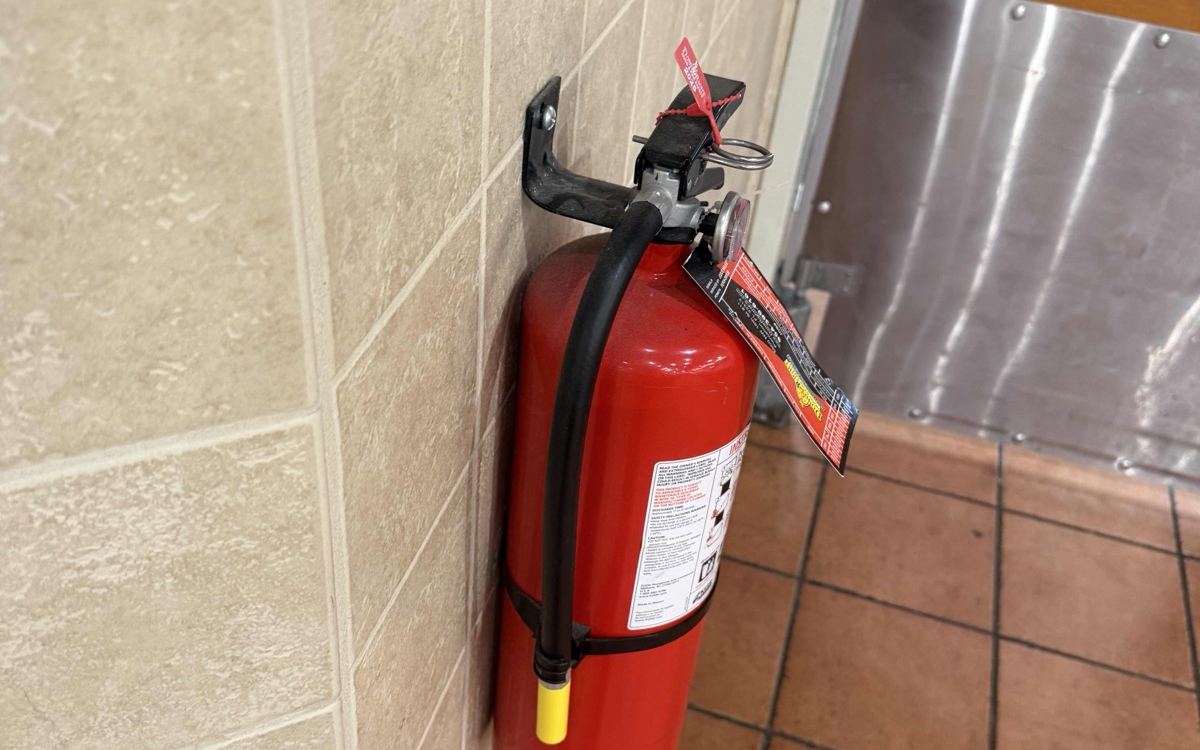
Georgia restaurants keep portable fire extinguishers under rules that cover who may service them, what the tag says and where the unit hangs. A manager or owner can check most of them from the tag and the wall.
The standard and the state's changes
Rule 120-3-3, from the Safety Fire Commissioner, adopts NFPA 10 (portable fire extinguishers) in its 2022 edition. The earlier edition was 2018. The change took effect on May 27, 2025. More changes to the rule have been proposed since, so check which version is in force.
Georgia adds its own conditions on top of NFPA 10:
- People who maintain and recharge extinguishers must be licensed or permitted under Title 25, Chapter 12 of the Georgia code.
- Tags and verification-of-service collars follow Rule 120-3-23.
- The top of an extinguisher of 40 pounds or less goes no higher than 48 inches above the floor.
Class K and the hood
A kitchen with deep fryers or other grease-heavy cooking usually has a Class K extinguisher near the line. Under the Georgia fire code changes, the Class K extinguisher and the sign that explains the operating sequence sit between 5 and 10 feet from the manual release of the hood suppression system. If you remodel the line and move the hood, expect the extinguisher to move with it.
A local company can take it from here. One form, free for restaurants.
Get connectedWho may service an extinguisher
Rule 120-3-23 sets requirements for both the firm and the individual technician.
A company needs a license from the Safety Fire Commissioner to install, inspect, repair, recharge, service or test portable fire extinguishers. The firm must be a current Georgia corporation and carry liability insurance of at least $1,000,000. It must also file samples of its tags and labels with the State Fire Marshal and show a qualifying certification. The Commissioner may inspect a firm announced or unannounced.
Each technician needs an individual permit and must be employed by a licensed firm. The permit rests on a NAFED portable fire extinguisher technician certificate, another recognized certification, or a manufacturer certification.
The same rule says that an extinguisher required by law or code must be installed, inspected, repaired, recharged, serviced or tested only by a properly licensed firm and permitted technician.
Reading the service tag
An extinguisher tag in Georgia is light yellow and measures 3 by 5.5 inches. It carries:
- the firm's name, address, phone number and license number
- the technician's name and permit number
- the serial number
- the service done, the type of extinguisher, and the month and year
- the weight of the agent, and the hydrostatic test due date where one applies
- the words "DO NOT REMOVE"
A new tag goes on every time service is done. Only the current one stays on the extinguisher. If the tag is missing, faded or shows an old date, call the firm that serviced it.
The six-year maintenance label is a blue metallic self-voiding decal. It shows the firm's license number and the technician's permit number.
What happens when a unit fails
If an extinguisher is not maintained under NFPA 10, the firm puts a non-compliance tag on it. The firm sends a copy of its report to the authority having jurisdiction, which is usually the local fire marshal. The firm must also keep inspection, test and maintenance records at its business address for at least two years.
Keep a copy of each service report, since the fire marshal may ask for it during an inspection.
Before an inspector arrives
- Is every extinguisher on its bracket, with the pin and seal in place?
- Is the top of every unit of 40 pounds or less at 48 inches or lower?
- Does each tag show a current date and both the firm's license number and the technician's permit number?
- Is the Class K unit within 5 to 10 feet of the hood system's manual release, next to the operating sign?
- Can you reach every unit without moving stock or equipment?
Items two to four come from the state's rules. Your local fire marshal's office can say what else it checks.
Checking a company
The Office of Insurance and Safety Fire Commissioner runs a public licensed professionals search. Look up the firm, then compare its license number with the number on a tag from a past service. Ask for the technician's permit number as well.
Work is done by independent licensed companies. You hire and pay the company directly. Describe the extinguisher service your Georgia kitchen needs in the form, and we'll pass the request to one licensed local company.
Questions
What color is a fire extinguisher service tag in Georgia?
Light yellow, 3 by 5.5 inches. A kitchen suppression system uses a light blue tag instead.
How high can I mount a fire extinguisher in a Georgia restaurant?
For a unit of 40 pounds or less, the top goes no higher than 48 inches above the floor, under Georgia's change to NFPA 10.
Where does the Class K extinguisher go?
Between 5 and 10 feet from the manual release of the hood suppression system, with the operation-sequence sign.
Who can recharge a restaurant extinguisher?
A firm licensed under Rule 120-3-23 with a permitted technician. The Safety Fire Commissioner issues both.
Sources
- Georgia Rule 120-3-3, State Minimum Fire Safety Standards (OCI PDF)
- Georgia Rule 120-3-3-.04, adopted standards and history
- Georgia Rule 120-3-23-.04, extinguisher firm licenses
- Georgia Rule 120-3-23-.05, extinguisher technician permits
- Georgia Rule 120-3-23-.13, service and records
- Georgia Rule 120-3-23-.14, tags
- OCI fire suppression professionals licensing
- OCI licensed professionals search