Commercial kitchens in Georgia: who checks what
- Pick what you need and give your kitchen's ZIP code.
- Each service goes to the number of local companies you choose, from one to five. We check licenses where the law requires one and email you their names.
- You talk with them and decide. You hire and pay the company directly.
Facts checked 2026-11-02.
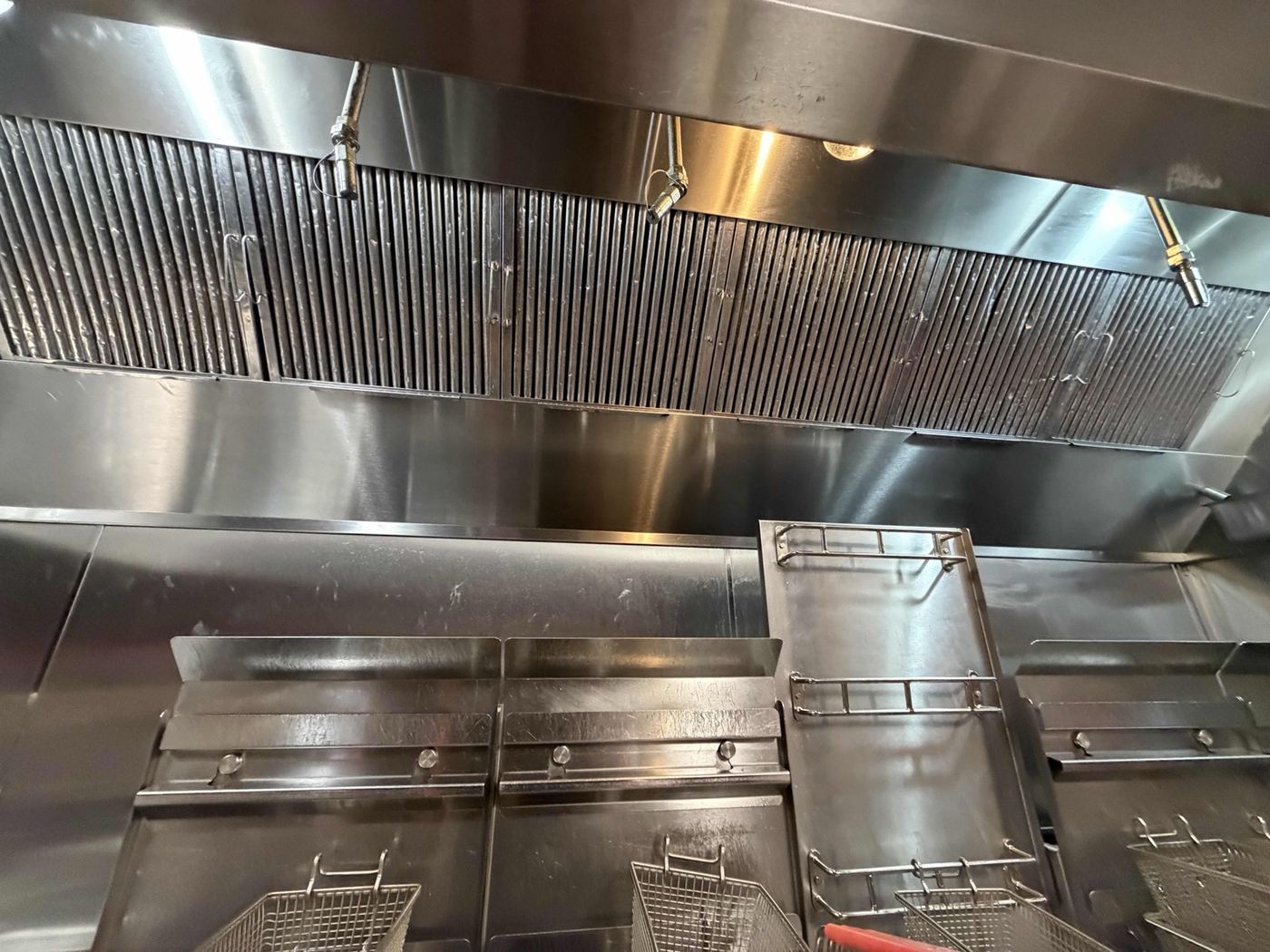
A Georgia commercial kitchen answers to more than one office. The county health office reviews the kitchen plans and permits the food service under state rules, while fire rules come from the Safety Fire Commissioner. The city or county issues building permits and, in many places, runs a grease program of its own.
Georgia Commercial Kitchen 101 is a referral service. If you want a licensed fire company, a hood installer, a grease hauler or a kitchen equipment dealer, tell us about the job and we'll pass the request to a local company, licensed where the law requires it. That company is independent of this site, and you hire and pay it directly.
Who checks what in Georgia
- Food safety and kitchen layout: the county health office, under the Department of Public Health food service rules (Chapter 511-6-1). In Fulton County that is the Fulton County Board of Health. In Gwinnett, Newton and Rockdale counties it is GNR Health.
- Fire protection rules: the Safety Fire Commissioner. Rule 120-3-3 sets which NFPA editions apply. Rule 120-3-23 licenses the companies that service fire extinguishers and kitchen fire suppression systems.
- Building, mechanical and plumbing permits: the city or county permit office. The Department of Community Affairs sets the state minimum codes, and local offices review plans and inspect the work.
- Grease: the local sewer utility's fats, oils and grease (FOG) program. The Environmental Protection Division (EPD) regulates the haulers who carry the waste away.
What gets serviced and who does it
How often each item is serviced depends on the edition of the standard and on your local office. Ask the fire marshal and the local FOG program which schedule applies at your address.
| Item | Rule behind it | Who does the work | What to keep |
|---|---|---|---|
| Kitchen fire suppression system | Rule 120-3-3 (NFPA 17A, 2024 edition) and Rule 120-3-23 | A firm licensed and a technician permitted by the Safety Fire Commissioner | Maintenance reports and the current blue service tag on the system |
| Portable fire extinguishers | Rule 120-3-3 (NFPA 10, 2022 edition) and Rule 120-3-23 | A licensed firm and a permitted technician | The current yellow service tag on each unit |
| Hood and duct | NFPA 96, 2024 edition since May 2025 (check the current state rule) | Ask the local fire marshal what training and proof it accepts | Whatever cleaning records the fire marshal asks to see |
| Grease trap | EPD Rule 391-3-6-.24 and the local FOG program | A hauler registered with EPD whose truck holds a local permit | Copies of the waste manifests, for three years |
| Food service permit | DPH Chapter 511-6-1 | The county health office inspects | The food service permit |
Building or remodeling a kitchen
Order matters, because each office wants to see the others' approvals.
- Under the food service rules, plans and specifications go to the health authority at least 14 business days before construction starts on a new or extensively remodeled food service. The plans show the menu, floor plan, equipment, mechanical plans and finishes.
- The city or county reviews architectural, mechanical and plumbing plans for the building permit. Atlanta, for example, lets applicants upload the Fulton County health approval and a sewer capacity certification as optional files when they apply.
- A hood needs an automatic fire-extinguishing system under the Georgia fire code changes. Ask the local fire marshal's office where those plans go.
- Many sewer utilities want grease trap sizing and the kitchen's tie-in to the sewer line before they release a plumbing permit.
- The health authority issues the food service permit after a complete application, the fee, approved plans and a preoperational inspection that shows the kitchen was built as approved.
See the guide to opening a restaurant in Georgia for the details of each step.
Checking a company's license
Georgia licenses fire extinguisher and kitchen suppression firms, and it licenses the individual technicians who work for them. The Office of Insurance and Safety Fire Commissioner has a public licensed professionals search where you can look up a firm. Every extinguisher and suppression system service tag shows the firm's name and license number and the technician's name and permit number. You can read those numbers off your own equipment.
Ask any company for its license and certificate numbers and check them with the agency that issued them.
22,034 eating places in Georgia in 2025
The U.S. Bureau of Labor Statistics counted 22,034 private restaurant and eating-place establishments in Georgia in 2025, up from 17,690 in 2019. That is a 24.6 percent increase. Fulton County had 3,414 and Gwinnett County had 2,265.
Use the form to describe a build-out, a remodel or a service call for a Georgia kitchen, and the request goes to the number of local companies you choose (one to five).
Guides
Places
Buying kitchen equipment
Questions
Who licenses fire suppression companies in Georgia?
The Safety Fire Commissioner does, under Rule 120-3-23. A firm needs a license to service pre-engineered kitchen suppression systems, and each technician needs a permit.
Does a new Georgia restaurant need a plan review?
Yes. The food service rules require plans and specifications for review when a food service is built, extensively remodeled or converted from another use. They go to the county health authority. The city or county building office reviews the building plans separately.
Who regulates the trucks that pump grease traps?
The Environmental Protection Division requires haulers to register, and the local government inspects and permits each truck. The hauler must keep a manifest for each stop.
Where can I look up a fire company's license?
Use the licensed professionals search on the Office of Insurance and Safety Fire Commissioner website, listed below.
Sources
- Georgia Rule 120-3-3, State Minimum Fire Safety Standards (OCI PDF)
- Georgia Rule 120-3-23-.06, kitchen suppression firms
- Georgia Rule 120-3-23-.07, kitchen suppression technicians
- Georgia Rule 120-3-23-.14, service tags
- OCI licensed professionals search
- DPH food service rules, Chapter 511-6-1
- Georgia Rule 511-6-1-.02, plan review and permits
- Georgia Rule 391-3-6-.24, commercial waste transporters
- EPD fats, oils and grease
- DCA 2026 code changes memo
- City of Atlanta online permitting
- GNR Health restaurant regulations
- BLS QCEW restaurants, 2025
- BLS QCEW restaurants, 2019