Home › Guides › Kitchen fire suppression in Georgia
Kitchen fire suppression in Georgia: rules and licensing
- Pick what you need and give your kitchen's ZIP code.
- Each service goes to the number of local companies you choose, from one to five. We check licenses where the law requires one and email you their names.
- You talk with them and decide. You hire and pay the company directly.
Facts checked 2026-11-02.
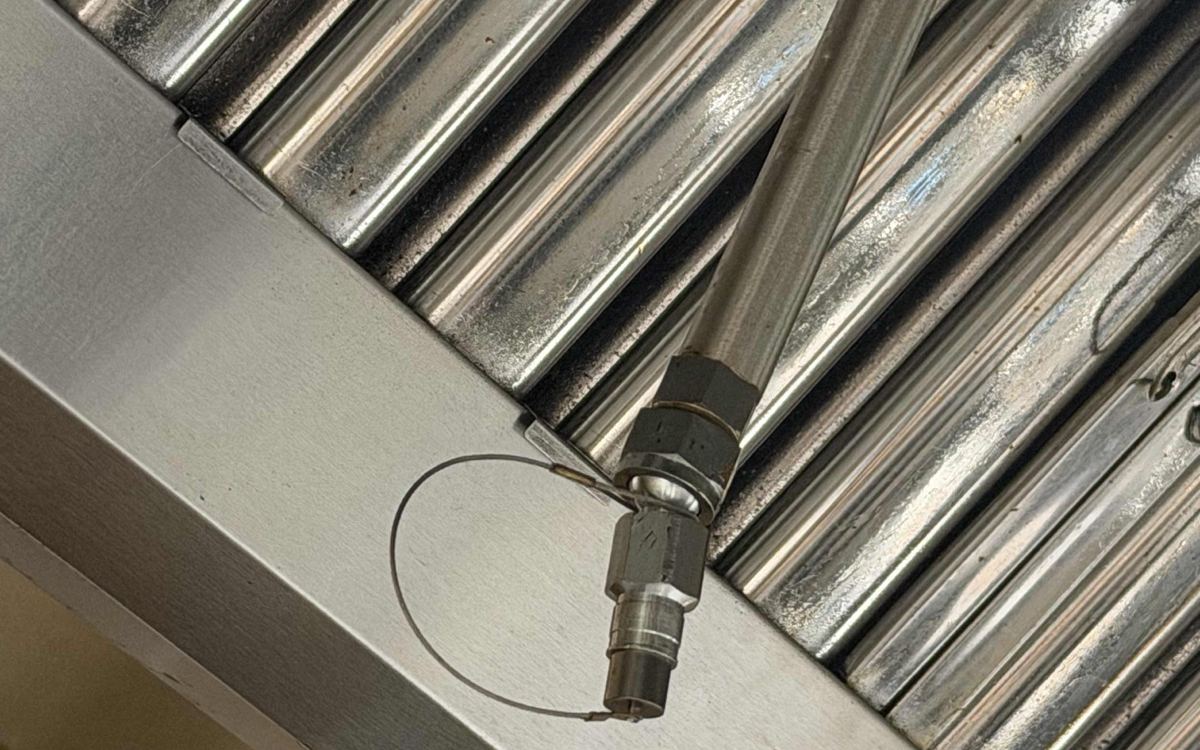
A restaurant hood in Georgia must be protected by an automatic fire-extinguishing system, and only a licensed firm with a permitted technician may install or service it. The fire code side is Rule 120-3-3 and the licensing side is Rule 120-3-23, both from the Safety Fire Commissioner.
What the fire code requires
Georgia changes the model fire code through the Safety Fire Commissioner's Rule 120-3-3. Under that rule, each required commercial kitchen exhaust hood and duct system is protected by an approved automatic fire-extinguishing system. The rule also adopts NFPA 17A, the standard for wet chemical systems, in its 2024 edition. NFPA 96, which covers commercial cooking ventilation and fire protection, is adopted in its 2024 edition as well.
These editions took effect on May 27, 2025. Before that, Georgia used the 2013 edition of NFPA 17A and the 2017 edition of NFPA 96. If your system was installed under the older editions, ask your local fire marshal how the office treats it today.
The state also published notices in 2025 proposing further changes to Rule 120-3-3. Check the current rule on the Office of Insurance and Safety Fire Commissioner (OCI) website before you rely on any edition year.
Who may install and service the system
Rule 120-3-23 decides this, and it sets requirements for both the firm and the technician.
A company needs a license from the Safety Fire Commissioner to install, inspect, repair, recharge, service or test pre-engineered kitchen or restaurant fire suppression systems. The rule requires proof that the company is a current Georgia corporation and carries liability insurance of at least $1,000,000. It also requires filed samples of its tags and labels and a qualifying certification.
Each individual needs a kitchen technician permit and must work for a licensed firm. The permit rests on a manufacturer certification, a NICET Level II certification in special hazards, a NAFED kitchen system technician certificate or another certification the Commissioner accepts.
Some licenses are restricted. A firm licensed on a manufacturer's certification may work only on the systems named in that certification. If your hood has a particular brand of system, ask the company whether its license covers that brand.
Rule 120-3-23 says that any suppression system required by law or code must be installed, inspected, repaired, recharged, serviced or tested only by a properly licensed firm and permitted technician. The NFPA 17A changes in Rule 120-3-3 say the same about design and installation.
A local company can take it from here. One form, free for restaurants.
Get connectedThe service tag
Every service leaves a tag on the system. In Georgia the tag for a suppression system is light blue and measures 3 by 5.5 inches. It shows:
- the firm's name, address, phone number and license number
- the technician's name and permit number
- the system's serial number
- what service was done, the type of system, and the month and year
- the words "DO NOT REMOVE"
A new tag goes on at installation and again each time service is done. On a system with several cylinders, the rule applies to each cylinder, control head, hand pull and control panel. If the control panel runs on a battery, the tag and the battery itself show the date the battery is due for replacement. Only the current tag stays in place.
Stored-pressure agent cylinders that have been maintained, tested or recharged also get a Verification of Service collar under the NFPA 17A changes.
When a system is not working
Cooking equipment may not be operated while the fire-extinguishing system that protects the hood, duct or appliances is not operating or is impaired.
When a firm finds that a system is not kept at its design capacity, or has been expanded without following the maker's installation rules, the firm puts a non-compliance tag on it and sends the authority having jurisdiction a copy of its report. The authority is usually the local fire marshal.
If a system is tagged as non-compliant, the owner or the owner's representative tells the fire authority in writing within 24 hours, under the NFPA 96 changes.
Records
The kitchen owner or the owner's representative keeps all maintenance reports for three years after the next maintenance of that type that the standard requires. The licensed firm keeps its own inspection, test and maintenance records at its business address for at least two years. Keep your copies where a fire inspector can reach them in the kitchen's office.
Class K extinguishers and signs
Under the Georgia fire code changes, the Class K extinguisher and the sign that explains the operating sequence sit between 5 and 10 feet from the manual release of the hood suppression system. Plan the wall space for both when you lay out the line.
Where plans go
The Safety Fire Commissioner's office reviews safety fire plans for some kinds of buildings, such as hotels, schools and buildings of four or more stories, through its online portal. Whether a restaurant's plans go to the state, to the local fire marshal or to both depends on the building. Ask the fire marshal or the permit office for your address which one applies. In Gwinnett County, the permit office lists fire suppression systems among the permits it issues. In the City of Atlanta, fire protection is one of the inspection types the city schedules.
Checking a company before you hire
The Office of Insurance and Safety Fire Commissioner has a public licensed professionals search. Look up the firm there. Then ask for the technician's permit number and compare both numbers with the ones printed on a tag from a past service.
You hire and pay the company directly, and the license and the work are the company's. Describe the suppression work your Georgia kitchen needs on the form, and we'll pass it to one licensed local company.
Questions
Does a Georgia restaurant hood need a fire suppression system?
Yes. Under Rule 120-3-3, each required commercial kitchen exhaust hood and duct system is protected by an approved automatic fire-extinguishing system.
What color is the service tag on a kitchen suppression system?
Light blue, 3 by 5.5 inches. It carries the firm's license number and the technician's permit number, and it must stay in place until the next service replaces it.
Who can service a restaurant fire suppression system?
A firm licensed by the Safety Fire Commissioner under Rule 120-3-23, using a technician with a kitchen technician permit. Some licenses are restricted to particular manufacturers' systems.
How long must I keep suppression system records?
The owner keeps maintenance reports for three years after the next maintenance of that type that NFPA 17A requires.
Can I keep cooking if the system is impaired?
No. The state's NFPA 17A changes say cooking equipment may not be operated while the system that protects it is not operating or is impaired.
Sources
- Georgia Rule 120-3-3, State Minimum Fire Safety Standards (OCI PDF)
- Georgia Rule 120-3-3-.04, adopted standards and history
- Georgia Rule 120-3-23-.06, firm licenses for kitchen systems
- Georgia Rule 120-3-23-.07, technician permits for kitchen systems
- Georgia Rule 120-3-23-.13, service and records
- Georgia Rule 120-3-23-.14, tags
- OCI licensed professionals search
- OCI safety fire plan review
- OCI proposed rule notice, Nov 6, 2025
- Gwinnett County building services
- City of Atlanta inspections